A chief product officer told me this month his strategy was done, and he felt good about it. Then we counted where his team's time actually went last year.
We pulled 10,000 Jira tickets, a full year of work, and matched them against the plan his leadership team approved. 23% lined up with the plan. 77% went to support, maintenance, and tickets nobody could tie back to a goal.
The room went quiet. I asked the question I ask every time that number lands: who here is actually working on the plan?
He is not alone in this. Strategy and product leaders I talk with spent this week debating the same gap, because everyone recognized their own year in it. Annual planning season is here, and every leadership team I know is building next year's plan with real confidence. Almost nobody asks what happened to last year's: whether it happened, whether anyone measured it while the year ran.
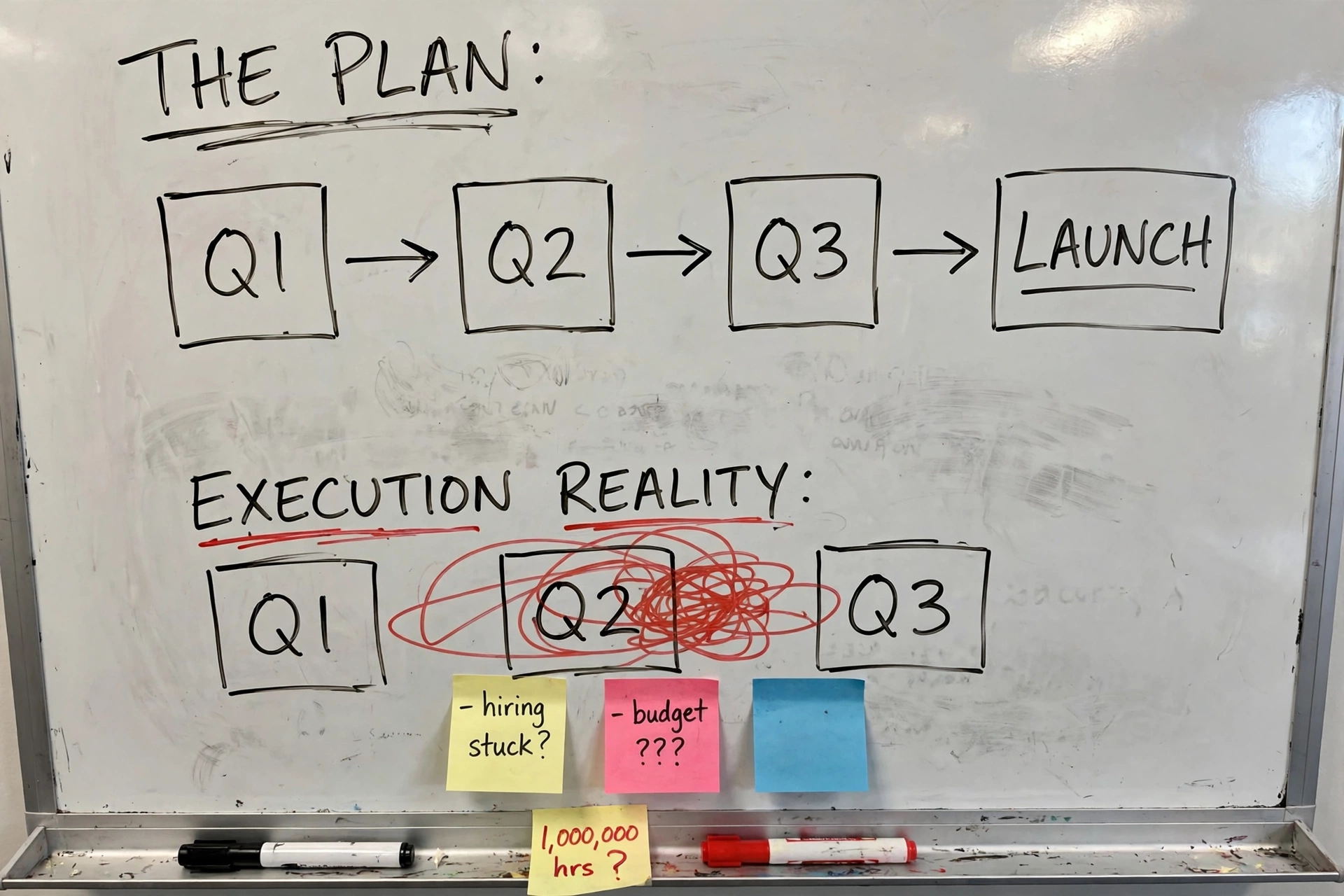
We build strategies. We do not operate them. The plan gets approved, the year gets busy, the work drifts toward whatever is loudest, and in January we write a new plan on top of the drift, no evidence the last one steered anything.
To be fair to the 77%: part of it deserves defending. Support is real work. Maintenance keeps the product alive. A customer escalation is not a distraction from the job. It is the job, that day. The problem is simpler: nobody chose it, nobody priced it, and nobody can see it next to the plan. Invisible work cannot be managed. It accumulates, one reasonable ticket at a time, until the plan describes a company that does not exist.
Strip the ceremony off and a plan is a claim about capacity: these people, these hours, these outcomes. Which is why cost, work, and impact have to sit on the same page. A plan is nothing without resources. In one portfolio review, we loaded five teams' plans into a single view and found one person allocated at 180%. Five reasonable plans, each approved on its own, adding up to a person who does not exist. Nobody had lied, and nobody had been careless. The plans had never been in the same room together, so the collision stayed invisible until the work started failing.
Strategy has to survive contact with reality, and the ticket queue is reality's record. The strategy deck records what we intended. The ticket queue records what we chose. Most companies read the first document once a year and the second one never, then wonder why the two stories disagree.
This gets more expensive from here, not less. AI made it easier to build. It did not make bad investments cheaper. Generating work is now nearly free: more features, more experiments, more tickets, more initiatives, each one defensible on its own slide. The scarce resource was never ideas. It is people's hours, and the discipline to decide which work actually deserves them. When building gets cheaper, validation becomes the job.
The number can move. I have watched an organization measure its alignment honestly, argue about it in the open, and move executed work from 20% aligned to the plan to 93%. No magic: one definition, looked at while the year was still running, every gap treated as a decision to make rather than a report to file. Readiness is not progress. Progress is not impact. Closing tickets is activity; share of capacity on the plan is progress; outcomes are impact. Most dashboards stop at the first one.
The fix is one number, watched all year: what share of our actual capacity is on the plan we approved, and is it moving? Reviewed while March still exists, not discovered the following January. And when next year's planning starts, it starts from evidence: what the work actually was, which bets paid off, which ones we quietly abandoned. That is decision memory. The alternative is annual amnesia with better catering.
Before your team finalizes next year's plan, ask the question from that quiet room: what share of this year's work actually moved this year's plan, and how do we know?
If nobody can answer it, you are not planning. You are just writing the next deck.